Retort processing in food: How commercial sterility is achieved and proven
Retort processing in food explained: how commercial sterility works, what F0 means, which packaging suits it, and what validation and FDA compliance require.
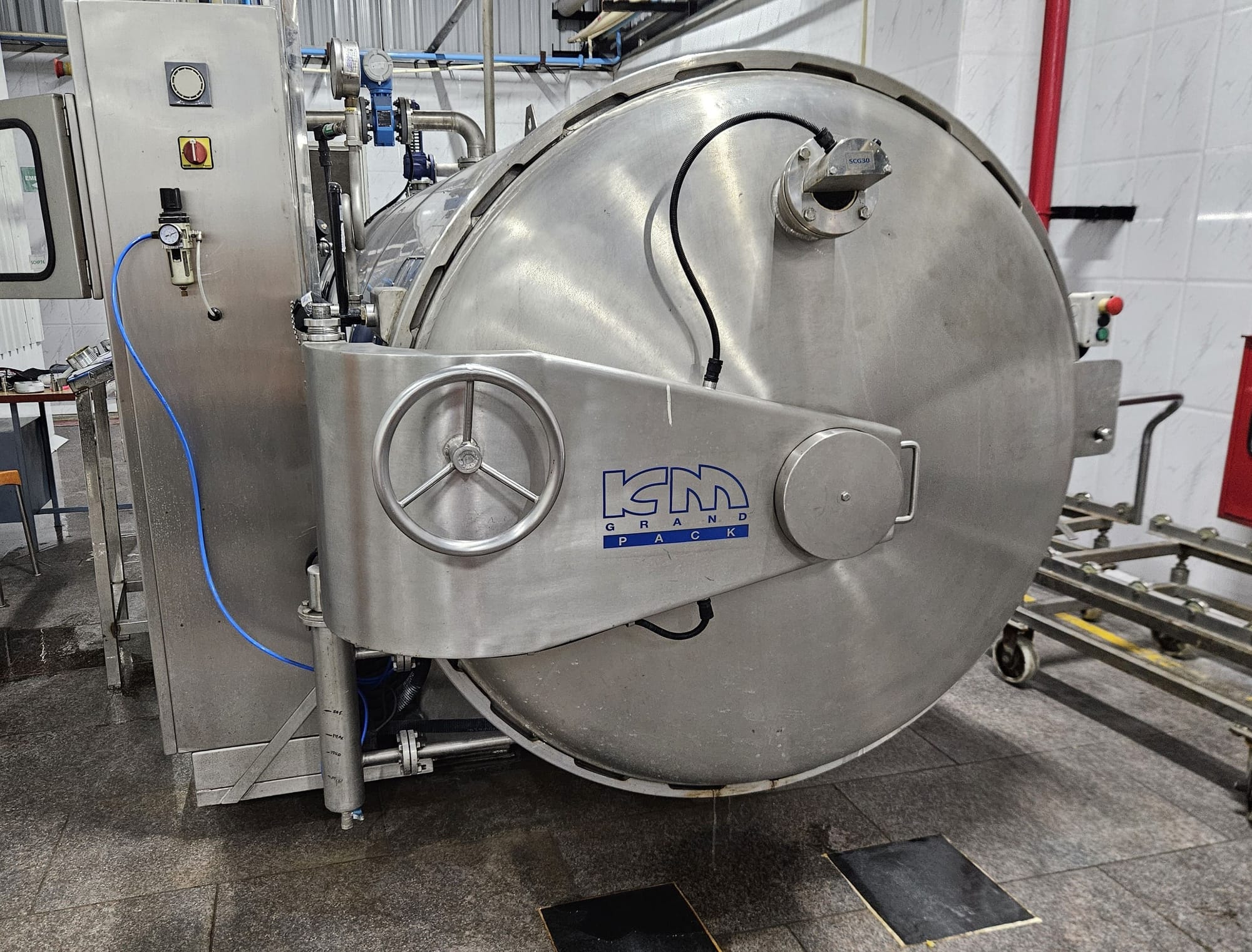
If you are planning a shelf-stable ready meal, the first question is how it will stay safe at room temperature without preservatives. For low-acid foods like curries, dals, meat and fish, the answer is retort processing in food. The product is sealed in its final container, then heated under pressure to temperatures above 100°C, hot enough to destroy the microorganisms that cause spoilage and illness.
What retort processing achieves
Retort sterilization aims for commercial sterility. Under 21 CFR 113.3, that means the food contains no microorganisms able to grow in it at normal room-temperature storage, and none of public health concern. Complete sterility is not required, and a few heat-resistant spores can survive the process. They cannot multiply in that product, so they never cause a problem.
Why pH 4.6 is the dividing line
How hard the food has to be treated depends on its acidity. Anything with a finished pH above 4.6 and a water activity above 0.85 counts as a low-acid food under FDA rules. WCurries, dals, meat, fish, most vegetables and milk-based sweets all fall into this group.
The 4.6 cutoff exists because of Clostridium botulinum. Its spores germinate and produce toxin in low-acid, low-oxygen conditions, and a sealed pouch or can provides exactly that. Foods below pH 4.6 do not give the spores that chance, so a milder heat treatment is enough. Low-acid foods have no such protection. Pasteurization and hot-fill do not destroy spores and so cannot make these foods shelf-stable at room temperature, while retort sterilization does.
Method | Typical temperature | What it achieves | Storage |
|---|---|---|---|
Pasteurization | ~63 to 100°C | Reduces microbial load | Chilled (or acid foods only) |
Hot-fill | ~85 to 95°C | Suits high-acid foods | Ambient (acid foods only) |
Retort sterilization | ~110 to 135°C | Commercial sterility | Ambient, including low-acid foods |
UHT and aseptic filling | ~135 to 150°C | Commercial sterility, filled after heating | Ambient |
How retort sterilization is measured
Proving that a process reaches the target comes down to two ideas, F0 and the cold spot.
F0: measuring lethality
Retorts typically run between 115°C and 130°C, with 121°C as the reference point. Engineers measure what a cycle delivers with F0 (pronounced "F-zero"), the lethality of a process expressed as equivalent minutes at 121.1°C. Two other numbers sit behind it. The D-value is the time at a given temperature needed to destroy 90% of a microbial population. The z-value is the temperature rise needed to cut that D-value tenfold, about 10°C for C. botulinum.
The safety benchmark is a 12D process, a twelve-log reduction of C. botulinum spores. With a D-value near 0.2 minutes at 121.1°C, that works out to a minimum F0 of roughly 2.5 to 3 minutes (see Holdsworth and Simpson, Thermal Processing of Packaged Foods, Springer, 2016). Real processes run higher. Heat-resistant spoilage organisms such as Geobacillus stearothermophilus outlast C. botulinum, and hot, humid storage conditions give them room to grow.
The cold spot problem
"Cold spot" means two different things in retort work, and a validated process has to deal with both. One is the coldest point in the retort itself. The other is the slowest-heating point inside a single container.
The retort's cold spot is the position in the vessel that receives the least heat. However well a retort is built, the heating medium does not reach every position equally. Air trapped in a steam retort, dead zones in water circulation and racks that block flow all leave some positions cooler than the rest. Where that position sits depends on the equipment and how it is loaded, not on the food.
The container's cold spot is the point inside the pack that heats most slowly, and here the food does matter. In a thin liquid or brine, convection currents carry heat through the container, so the cold spot is small and heat reaches it quickly. In a thick paste, dense puree or milk-based sweet, heat moves only by conduction, working slowly inward from the wall. The centre lags well behind the retort temperature, and lethality builds far more slowly there.
The pack itself moves this cold spot too. Thickness matters most, because heat has to travel to the centre, so a deeper pouch or larger can adds time. Fill weight, headspace, viscosity, starting temperature and the way containers are racked in the retort all shift it. Change any one of them and the cold spot heats differently.
An F0 value describes the slowest-heating point of the container, in a pack sitting at the coldest position in the retort. The whole process is designed around that combination. If it receives enough heat, every other pack in the vessel has received more.
Temperature distribution and heat penetration studies
A temperature distribution (TD) study finds the retort's cold spot. Temperature sensors are spread through the vessel in a representative load, and the cycle is run while they record. The positions that lag behind or run below the set temperature show where the retort is coldest. TD testing is part of retort qualification, so it belongs to the equipment and is repeated when the equipment or the loading pattern changes.
A heat penetration (HP) study finds the container's cold spot and measures what happens there. Thermocouples (temperature sensors) or wireless data loggers are placed at the suspected cold spot in test containers. Those containers are run through the retort in the position the TD study identified as coldest, alongside a full load. The result is a heat penetration curve, temperature against time, from which the process authority calculates how long the hold must last to deliver the target F0.
The HP study is run under worst-case conditions: the largest fill weight, the thickest product, the biggest particles and the lowest starting temperature. Replicate runs confirm the result is repeatable. A study done on an easy batch flatters the process and leaves real production under-processed.\
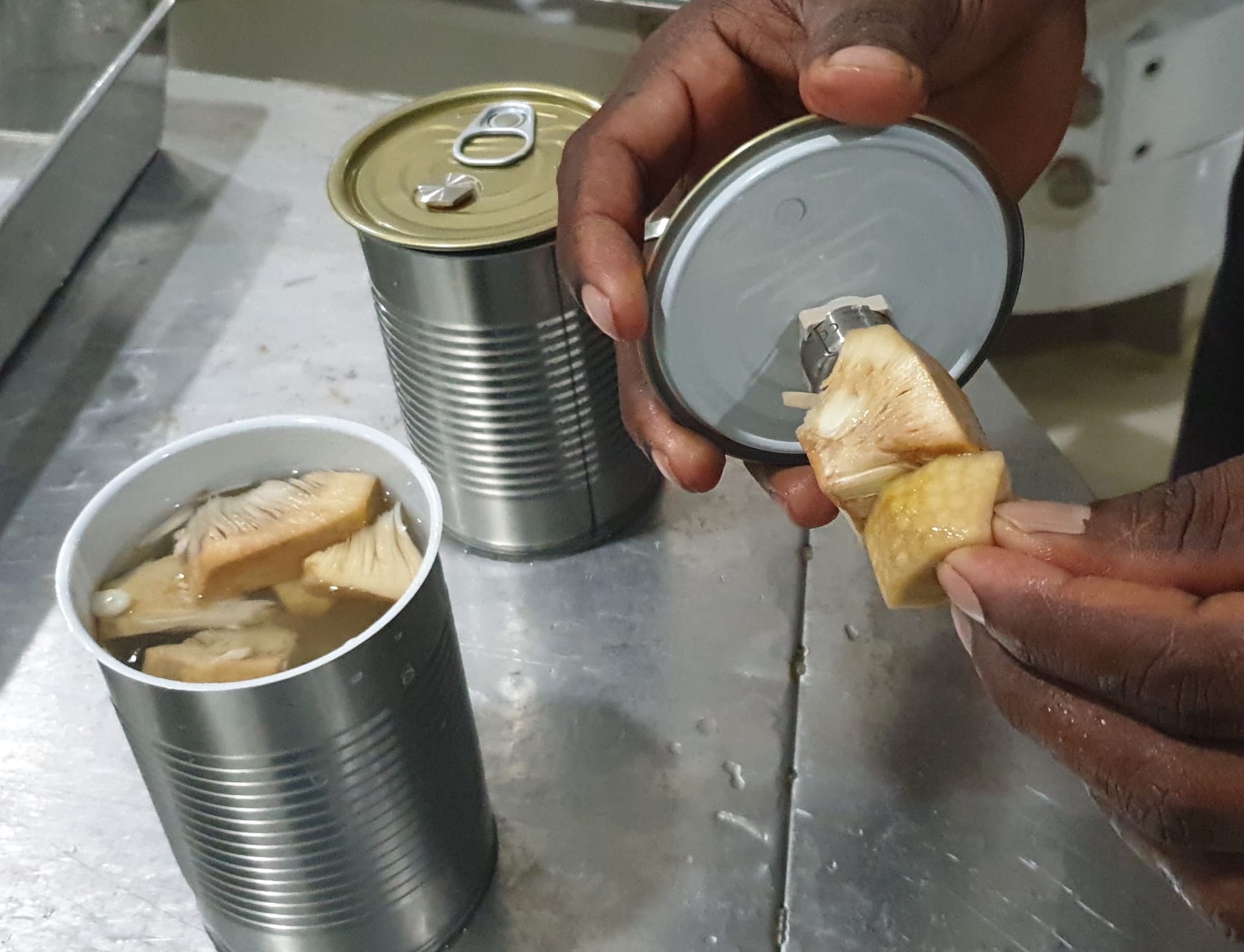
Both studies have to be right. If the TD study misses the retort's coldest position, the test packs sit somewhere warmer than the worst case. If the probe is not at the container's true cold spot, it reads warmer than the slowest part of the pack. Either way, the calculated F0 overstates what the slowest pack received. An over-processed product loses texture and colour. An under-processed one is a safety failure.
Choosing a container: pouches, cans, trays and jars
The container sets how quickly heat reaches the cold spot, so a packaging change is also a process change.
Format | Strengths | Watch-outs |
|---|---|---|
Metal can | Sturdy, long shelf life, well understood | Heavy, slower heat penetration, not microwavable |
Retort pouch | Thin profile, shorter process, light freight | Seal integrity, handling damage, rack design |
Plastic tray or cup | Microwave-ready, good presentation | Barrier properties, headspace and overpressure control |
Glass jar | Premium image | Thermal shock, closure design, breakage |
The retort pouch, a flexible laminate typically built from polyester, aluminium foil and polypropylene, is now common in ready meals. Its thin profile shortens heat penetration time, and its low weight cuts freight costs. Rack design matters more than it looks, because a pouch has to stay flat and evenly spaced to heat uniformly.
The quality trade-off: what heat does to texture and nutrition
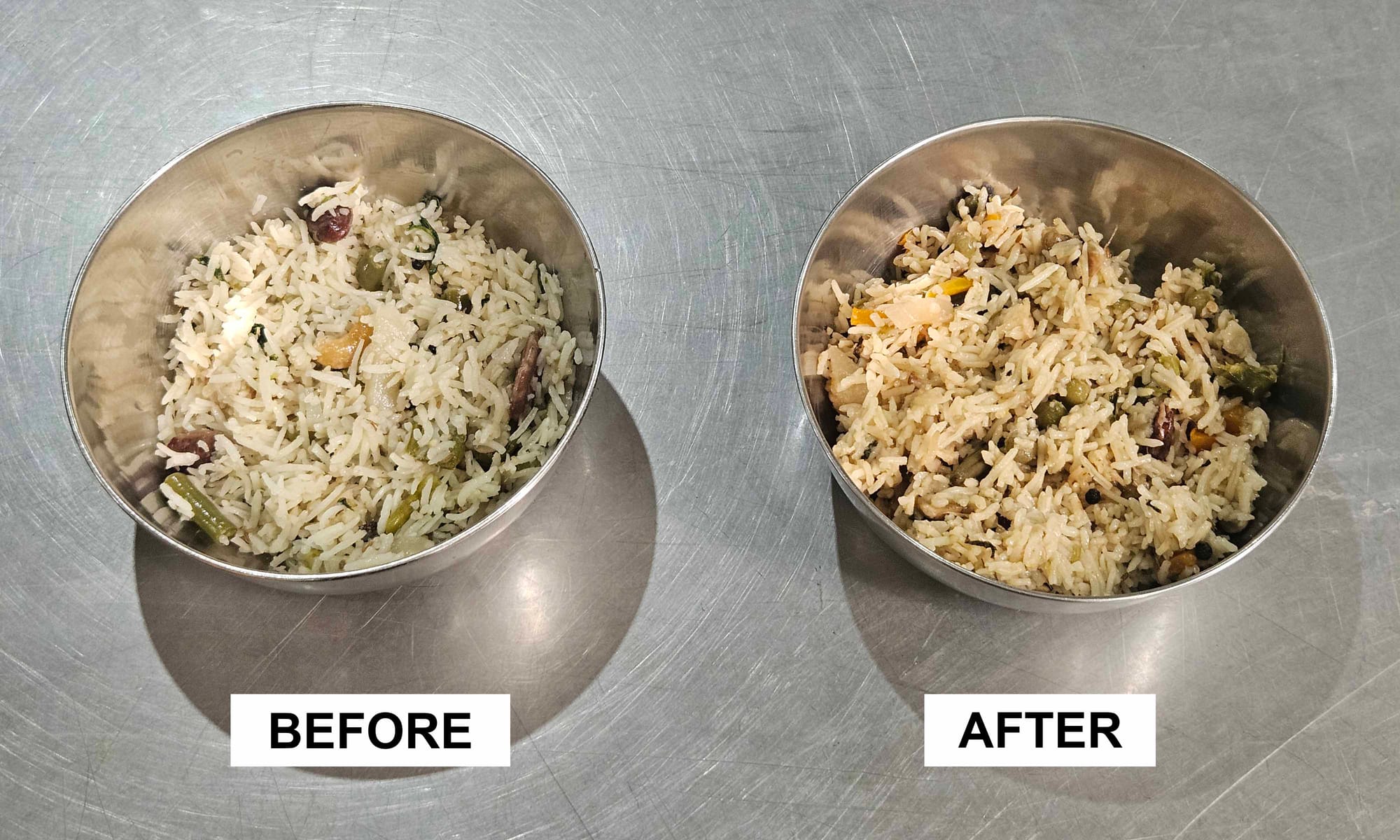
Heat that destroys spores also works on the food itself. Texture softens, colours shift, and heat-sensitive vitamins such as vitamin C, thiamine and folate degrade. Minerals, protein and fat are largely unaffected, and heating tomatoes makes lycopene easier for the body to absorb. A review by Rickman, Barrett and Bruhn found that nutrient losses in fresh produce during storage and cooking can be larger than most people assume, while the initial heat treatment of canned produce does cost water-soluble vitamins such as vitamin C and the B vitamins (Journal of the Science of Food and Agriculture, 2007).
Processors limit the damage with higher temperatures for shorter times, better container geometry and agitation, which cut quality loss while delivering the same lethality.
Where retort processes go wrong
Not understanding minimum F0 and sterilization
Some manufacturers set a process by retort temperature and time, for example 121°C for 30 minutes copied from another product. That number describes the retort's cycle and says nothing about the heat the food received. The Fo has to be decided after studying the product parameters like ingredients, pH, viscosity, brix etc. Then a process needs to be set that clears this designed Fo.
The opposite mistake is just as common. Pushing F0 far above what the product needs adds no safety and costs texture and flavour. Underneath both sits a simple confusion: pasteurization reduces the microbial load and leaves spores behind, while sterilization is designed to leave the food commercially sterile.
Skipping validation
A recipe that ran well in a pilot batch has been tested for taste, not for lethality. Validation means a heat penetration study on the actual product and container, temperature distribution testing on the retort, and a scheduled process set by a qualified processing authority. Without them, the process rests on a guess.
A change in formulation, container, fill weight, retort or loading pattern can move the cold spot, so each change needs review before it reaches production.
Neglecting seal integrity
A sterile pack is only safe while it stays sealed, and cooling is the weak point. As a pack cools, its contents contract, and any leak, even a microscopic one, can draw in cooling water and whatever is in it. Cooling under overpressure protects pouch and tray seals from the pressure of expanding contents, but it cannot repair a seal that was flawed to begin with.
Getting the preprocessing wrong
The process is calculated for a product in a specific condition, so what happens before the retort matters as much as the cycle. Blanching, cooking, soaking and mixing set the viscosity, particle size, starting temperature and fill weight the validation study assumed.
Ingredient quality sets the spore load the process has to overcome. A long delay between filling and retorting lets the product cool and gives microbes time to multiply. Adjusting pH is preprocessing too, and deliberately acidified foods fall under a separate rulebook, 21 CFR Part 114.
From process design to approval: validation and compliance
What FDA expects
In the US, low-acid foods in sealed containers fall under 21 CFR Part 113. A processing authority with expert knowledge of thermal processing must establish the scheduled process. The process authority must complete an approved Better Process Control School course. The plant registers as a food canning establishment (FCE) and files each process with the FDA, which issues a submission identifier (SID). Products with meaningful meat or poultry content may fall under USDA FSIS instead.
Validating the process and the equipment
Two separate questions need answers. Does this product reach its target F0 at the cold spot? That is the heat penetration study. Does this retort deliver the same temperature throughout the vessel, every cycle? That is qualification: installation, operational and performance qualification (IQ/OQ/PQ), including temperature distribution and heat penetrationtesting.
Auditors under BRCGS and buyers who work to the Codex Code of Hygienic Practice for Low-Acid and Acidified Low-Acid Canned Foods (CAC/RCP 23-1979) expect to see both on file.
Conclusion
Retort processing works when the process, the container and the retort are validated together. The requirements are fixed: commercial sterility, a twelve-log margin against C. botulinum, and an F0 measured at the cold spot. How you reach them differs from product to product, which is why each process needs its own heat penetration data and its own filing.
Ready to develop your retort product?
If you are developing a shelf-stable ready meal or preparing an FDA filing, Joeltech Systems can support retort product development, thermal process validation and compliance consulting. Reach out through www.joeltech.in to talk through your product.